5 Makeup Tips for Mature Skin: A Better Way to Apply Your Makeup


“I believe all women are pretty without makeup—but with the right makeup can be pretty powerful.” — Bobbi Brown
On a typical Tuesday, you wake up, wash your face, and apply your makeup like you’ve done thousands of times. When you’re done, you take a step back and sense something is off.
The same amount of foundation looks heavier, your mascara makes your eyes look tired, and your blush doesn’t give you the fresh look it once did.
Before you start calculating the cost of a whole new line of makeup, take a deep breath. Sometimes, a few tweaks in how you apply your makeup might be all you need. As skin matures, its texture and moisture levels can change. Makeup may sit differently on your skin too.
You might be tempted to use more to cover up. Instead, try a lighter touch to create a smoother, fresher, more natural look. Here are five common makeup mistakes and simple ways to make them work better for mature skin.
“I believe all women are pretty without makeup—but with the right makeup can be pretty powerful.” — Bobbi Brown
On a typical Tuesday, you wake up, wash your face, and apply your makeup like you’ve done thousands of times. When you’re done, you take a step back and sense something is off.
The same amount of foundation looks heavier, your mascara makes your eyes look tired, and your blush doesn’t give you the fresh look it once did.
Before you start calculating the cost of a whole new line of makeup, take a deep breath. Sometimes, a few tweaks in how you apply your makeup might be all you need. As skin matures, its texture and moisture levels can change. Makeup may sit differently on your skin too.
You might be tempted to use more to cover up. Instead, try a lighter touch to create a smoother, fresher, more natural look. Here are five common makeup mistakes and simple ways to make them work better for mature skin.
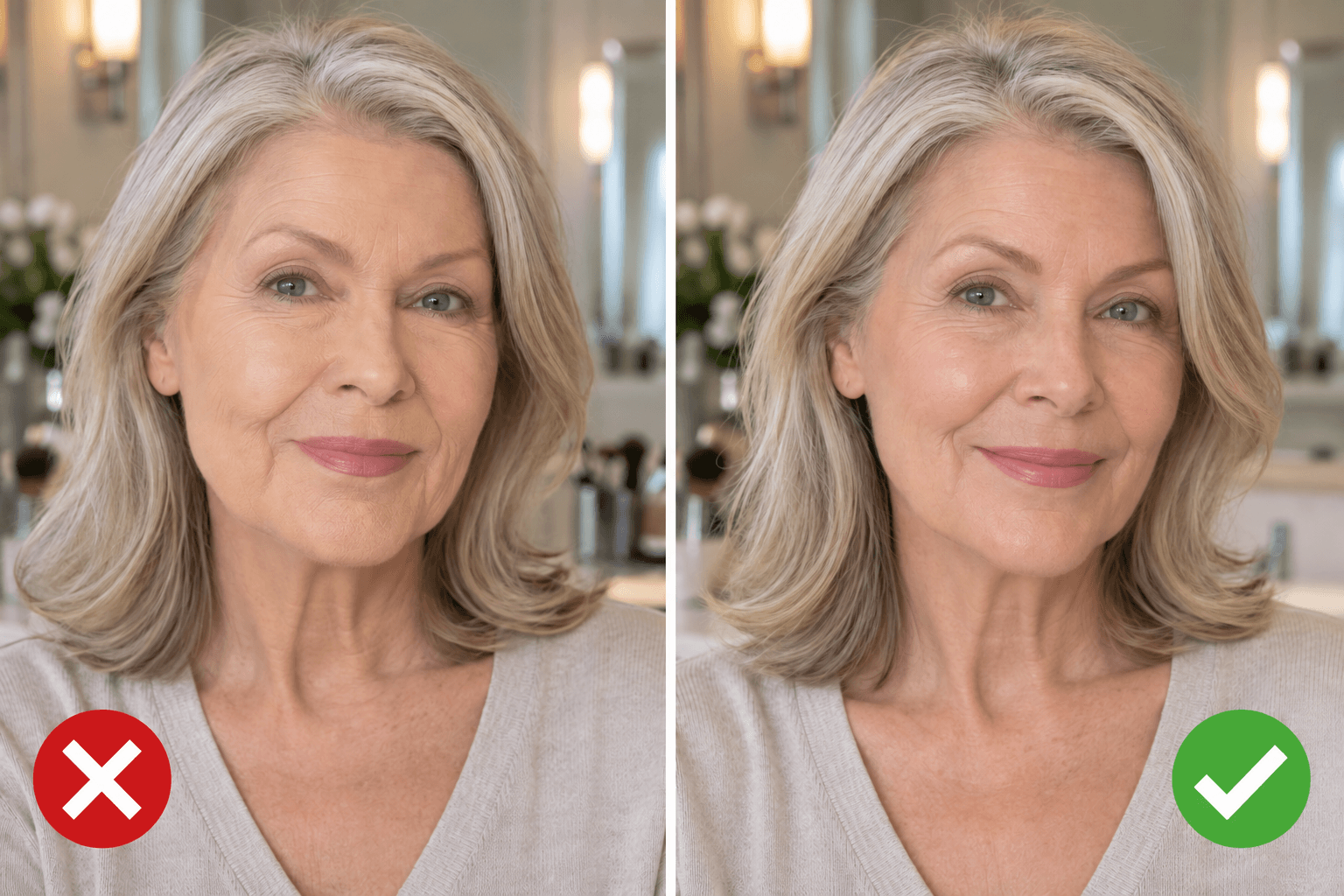
1. Too Much Base
When you’ve always applied foundation to your entire face, it can feel strange to do anything else.
You may even add a little extra to cover dark spots, redness, or uneven tone.
“I believe all women are pretty without makeup—but with the right makeup can be pretty powerful.” — Bobbi Brown
On a typical Tuesday, you wake up, wash your face, and apply your makeup like you’ve done thousands of times. When you’re done, you take a step back and sense something is off.
The same amount of foundation looks heavier, your mascara makes your eyes look tired, and your blush doesn’t give you the fresh look it once did.
Before you start calculating the cost of a whole new line of makeup, take a deep breath. Sometimes, a few tweaks in how you apply your makeup might be all you need.
As skin matures, its texture and moisture levels can change. Makeup may sit differently on your skin too.
You might be tempted to use more to cover up. Instead, try a lighter touch to create a smoother, fresher, more natural look.
Here are five common makeup mistakes and simple ways to make them work better for mature skin.
1. Too Much Base
When you’ve always applied foundation to your entire face, it can feel strange to do anything else.
You may even add a little extra to cover dark spots, redness, or uneven tone. More coverage seems like it should create smoother-looking skin.
Sometimes, it does the opposite. A thick layer of makeup can settle into smile lines, dry areas, and uneven texture. You may end up noticing the makeup more than the skin underneath it.
A Better Way: Use Coverage Only Where You Need It Instead of starting with your whole face, start with the areas that need a little help. Try using Vibriance Complexion Stick on dark spots, redness, and areas of uneven tone. Begin with a small amount and blend it before adding more.
And what about the areas that already look good? Let them be. Allowing some of your natural skin to show can make your complexion look fresh and natural. You still get the coverage you want without feeling like you’re wearing a mask.
More coverage seems like it should create smoother-looking skin.Sometimes, it does the opposite.
A thick layer of makeup can settle into smile lines, dry areas, and uneven texture. You may end up noticing the makeup more than the skin underneath it.
A Better Way: Use Coverage Only Where You Need It Instead of starting with your whole face, start with the areas that need a little help. Try using Vibriance Complexion Stick on dark spots, redness, and areas of uneven tone. Begin with a small amount and blend it before adding more.
And what about the areas that already look good? Let them be. Allowing some of your natural skin to show can make your complexion look fresh and natural. You still get the coverage you want without feeling like you’re wearing a mask.
2. Harsh Blending
We’ve all had those mornings. You’re running late, so you swipe on your makeup and rub it in quickly.
Rushing can leave your makeup looking streaky or patchy.
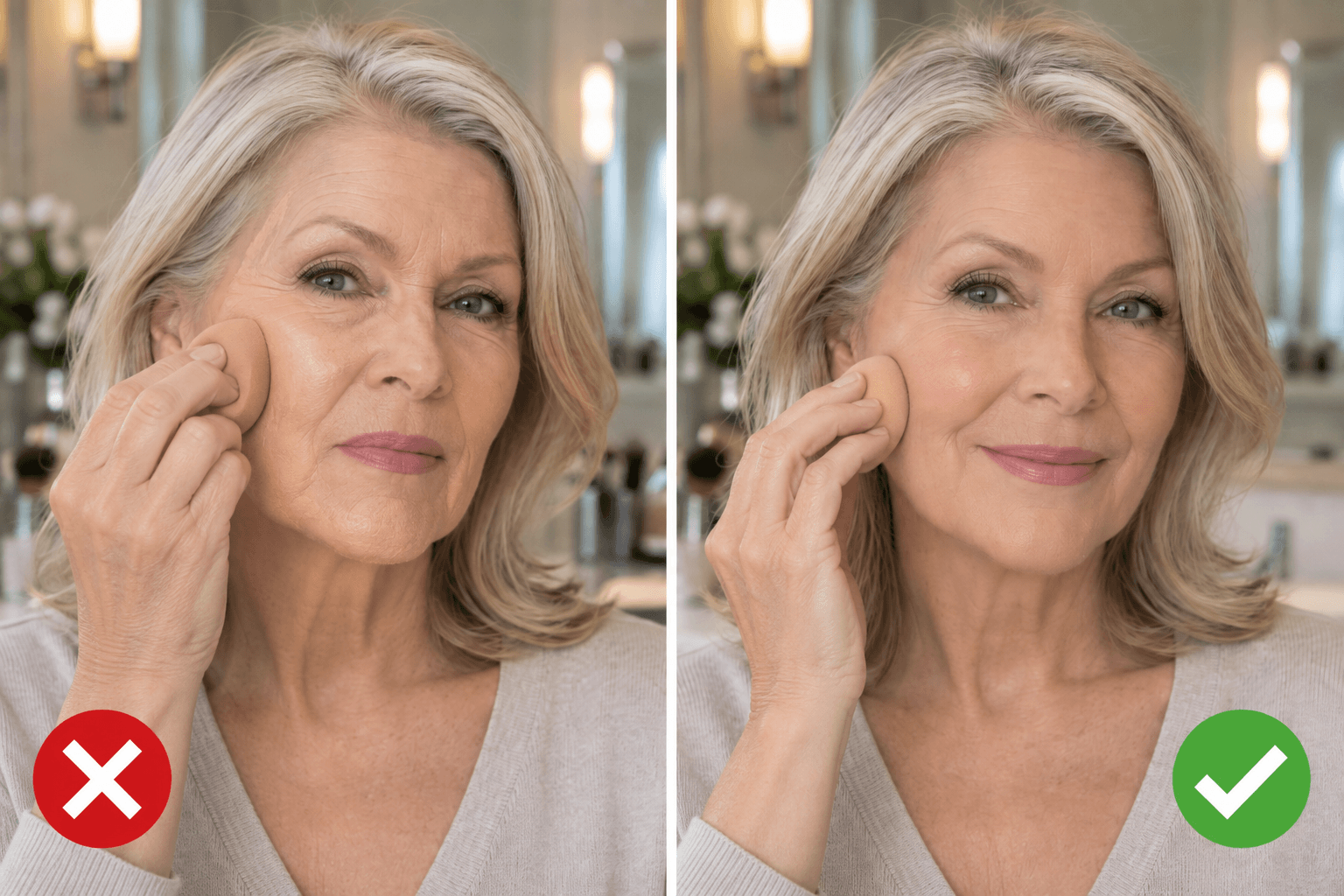
Using too much pressure can also move the skincare underneath. Be especially careful around your eyes and mouth. The skin in these areas can be more delicate. Don’t forget the edges—unblended makeup around your nose, jawline, or hairline can make your base look obvious.
A Better Way: Blend Gently Give yourself a lighter hand. Try tapping, pressing, or gently buffing the product into your skin. Work on one small area at a time instead of trying to blend your whole face at once.
Take an extra moment around your nose, jawline, hairline, and under your eyes. Use even less pressure over fine lines or areas with more texture. You’re not trying to rub the makeup away; you’re simply softening it into your skin. When you’re finished, you want people to notice you, not where your makeup begins and ends.
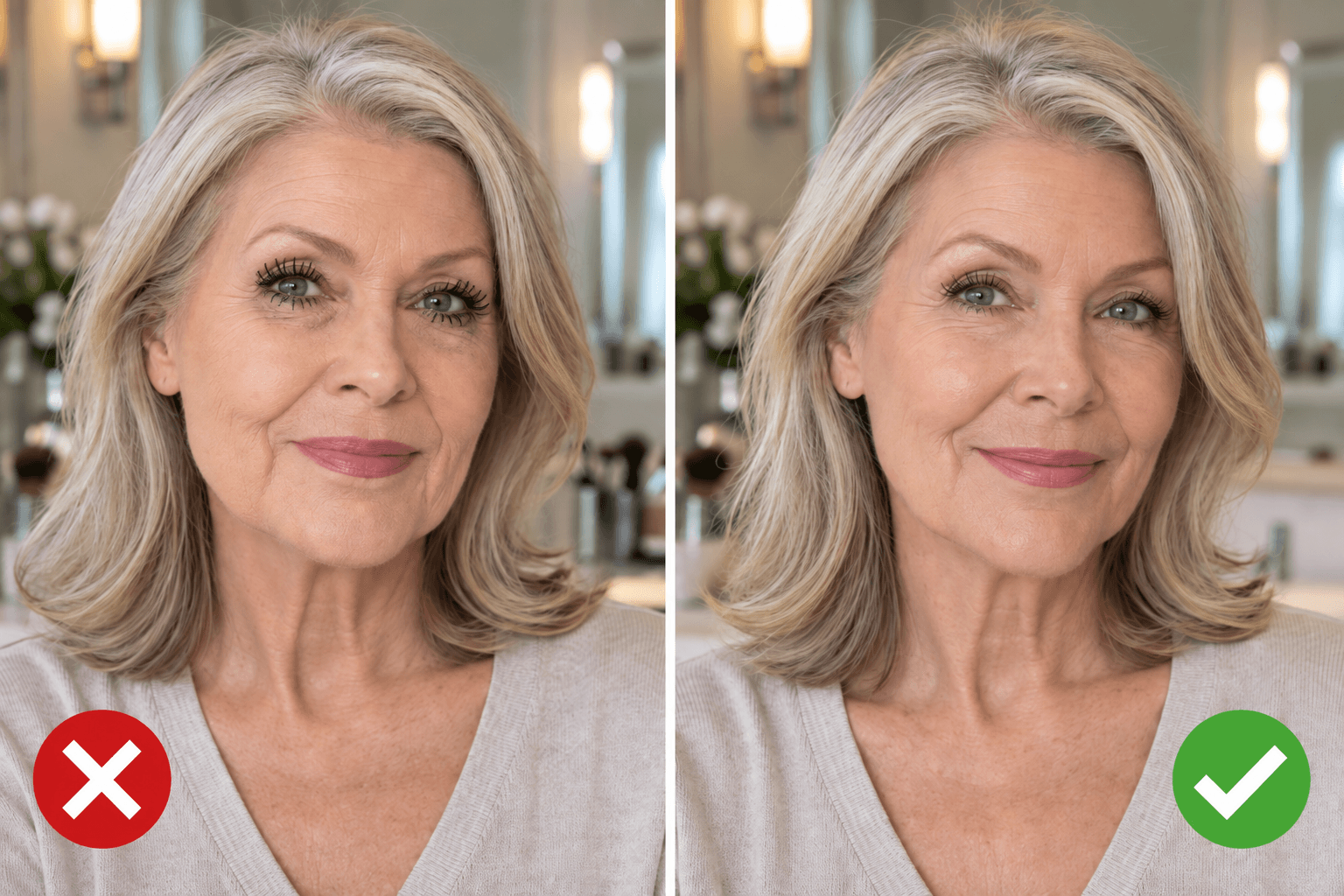
3. Heavy Mascara
One coat of mascara looks good, so another coat should look even better, right? Not always.
Too many coats can make lashes look clumpy, while heavy lower lashes can darken the eye area.
2. Harsh Blending
We’ve all had those mornings. You’re running late, so you swipe on your makeup and rub it in quickly.
The problem is that rushing can leave your makeup looking streaky or patchy, and too much pressure may also move the skincare you applied underneath.
Be especially careful around your eyes and mouth. The skin in these areas can be more delicate. Don’t forget the edges—unblended makeup around your nose, jawline, or hairline can make your base look obvious.
A Better Way: Blend Gently Give yourself a lighter hand. Try tapping, pressing, or gently buffing the product into your skin. Work on one small area at a time instead of trying to blend your whole face at once.
Take an extra moment around your nose, jawline, hairline, and under your eyes. Use even less pressure over fine lines or areas with more texture. You’re not trying to rub the makeup away; you’re simply softening it into your skin. When you’re finished, you want people to notice you, not where your makeup begins and ends.
1. Too Much Base
When you’ve always applied foundation to your entire face, it can feel strange to do anything else.
You may even add a little extra to cover dark spots, redness, or uneven tone.
More coverage seems like it should create smoother-looking skin.
Sometimes, it does the opposite. A thick layer of makeup can settle into smile lines, dry areas, and uneven texture. You may end up noticing the makeup more than the skin underneath it.
A Better Way: Use Coverage Only Where You Need It Instead of starting with your whole face, start with the areas that need a little help.
Try using Vibriance Complexion Stick on dark spots, redness, and areas of uneven tone. Begin with a small amount and blend it before adding more.
And what about the areas that already look good? Let them be. Allowing some of your natural skin to show can make your complexion look fresh and natural.
You still get the coverage you want without feeling like you’re wearing a mask.
Add a little smudging under the eyes, and you may look more tired than awake. That’s probably not the look you were going for.
A Better Way: Focus on the Upper Lashes Start by giving your upper lashes most of the attention. Apply Vibriance Volumizing Mascara near the base of your upper lashes. Then pull the wand upward toward the tips.
This helps create definition while drawing the eye upward. Build your mascara slowly; stop and look before adding another coat.
You can also go lighter on the lower lashes. A small amount may be all you need, or you may prefer to skip them altogether. The goal is a clean, lifted definition that helps your eyes look open and awake.
2. Harsh Blending
We’ve all had those mornings. You’re running late, so you swipe on your makeup and rub it in quickly.
The problem is that rushing can leave your makeup looking streaky or patchy, and too much pressure may also move the skincare you applied underneath.
Be especially careful around your eyes and mouth. The skin in these areas can be more delicate.
Don’t forget the edges—unblended makeup around your nose, jawline, or hairline can make your base look obvious.
A Better Way: Blend Gently Give yourself a lighter hand. Try tapping, pressing, or gently buffing the product into your skin. Work on one small area at a time instead of trying to blend your whole face at once.
Take an extra moment around your nose, jawline, hairline, and under your eyes. Use even less pressure over fine lines or areas with more texture.
You’re not trying to rub the makeup away; you’re simply softening it into your skin. When you’re finished, you want people to notice you, not where your makeup begins and ends.
3. Heavy Mascara
One coat of mascara looks good, so another coat should look even better, right? Not always.
Too many coats can leave lashes looking clumpy and heavy, and loading up the lower lashes can also make the eye area look darker.
Add a little smudging under the eyes, and you may look more tired than awake. That’s probably not the look you were going for.
A Better Way: Focus on the Upper Lashes Start by giving your upper lashes most of the attention. Apply Vibriance Volumizing Mascara near the base of your upper lashes. Then pull the wand upward toward the tips.
This helps create definition while drawing the eye upward. Build your mascara slowly; stop and look before adding another coat.
You can also go lighter on the lower lashes. A small amount may be all you need, or you may prefer to skip them altogether. The goal is a clean, lifted definition that helps your eyes look open and awake.
4. Low Blush
We’ve always been told to smile and put blush on the apples of your cheeks. Sound familiar?
It’s a makeup tip many of us learned years ago. Placing blush too low can pull the face downward.
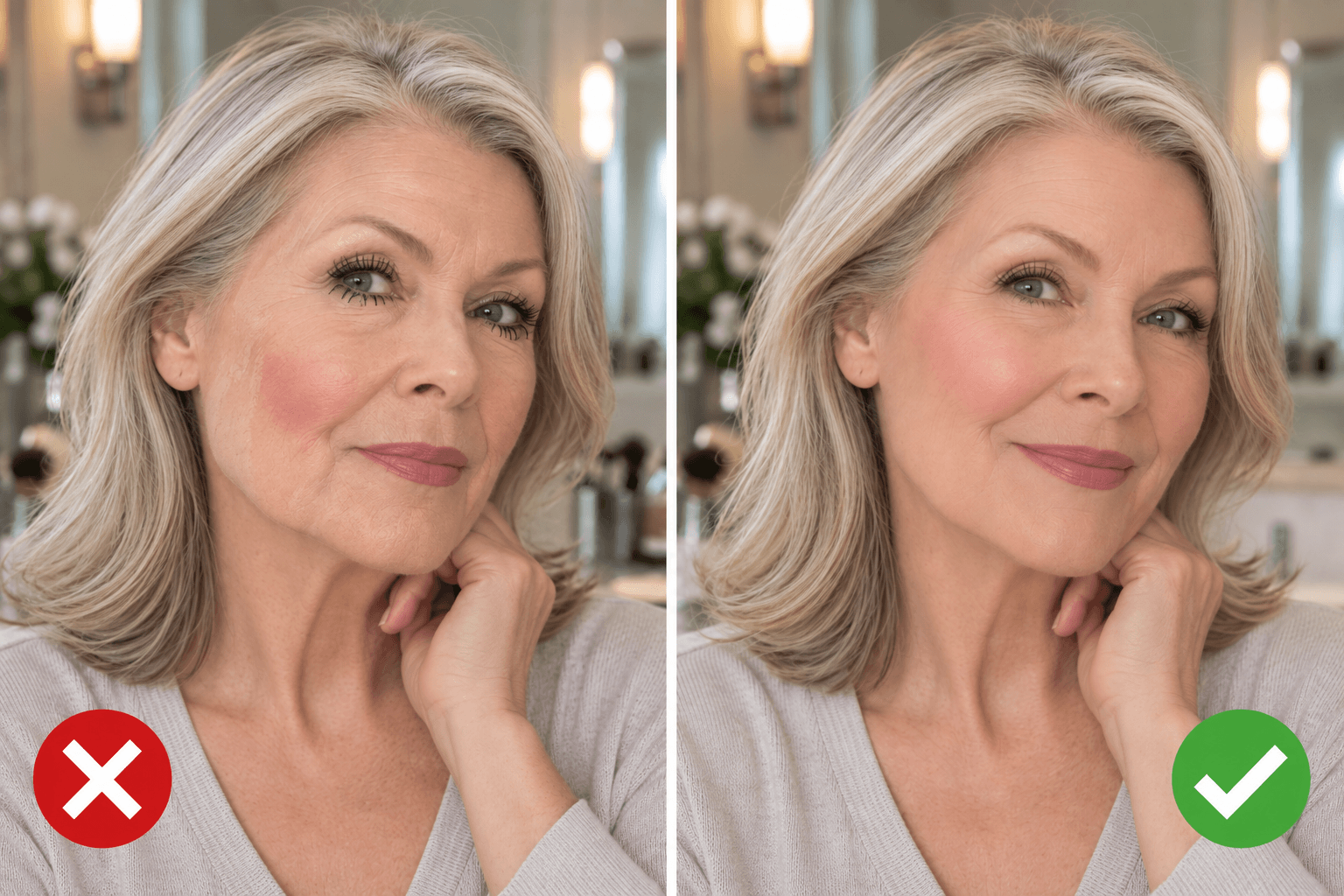
Bringing it too close to your nose or mouth can have the same effect. Then there’s the temptation to load up your brush with color, but too much blush at once can be hard to blend and may leave you with two very noticeable cheeks.
A Better Way: Use Vibriance Radiance Stick to move your blush placement up a little. Apply a small amount slightly higher on your cheeks, then blend the color upward and outward. Start lightly and build from there.
It’s much easier to add more blush than to remove too much. You’re looking for a soft touch of color that brings warmth and life to your face. Ideally, no one thinks, “What great blush!” They think, “You look great today.”
5. Too Obvious Highlights
Highlighter is meant to make your skin glow, so it can be tempting to use it everywhere.
You might add a little to your cheeks, nose, and even your forehead.
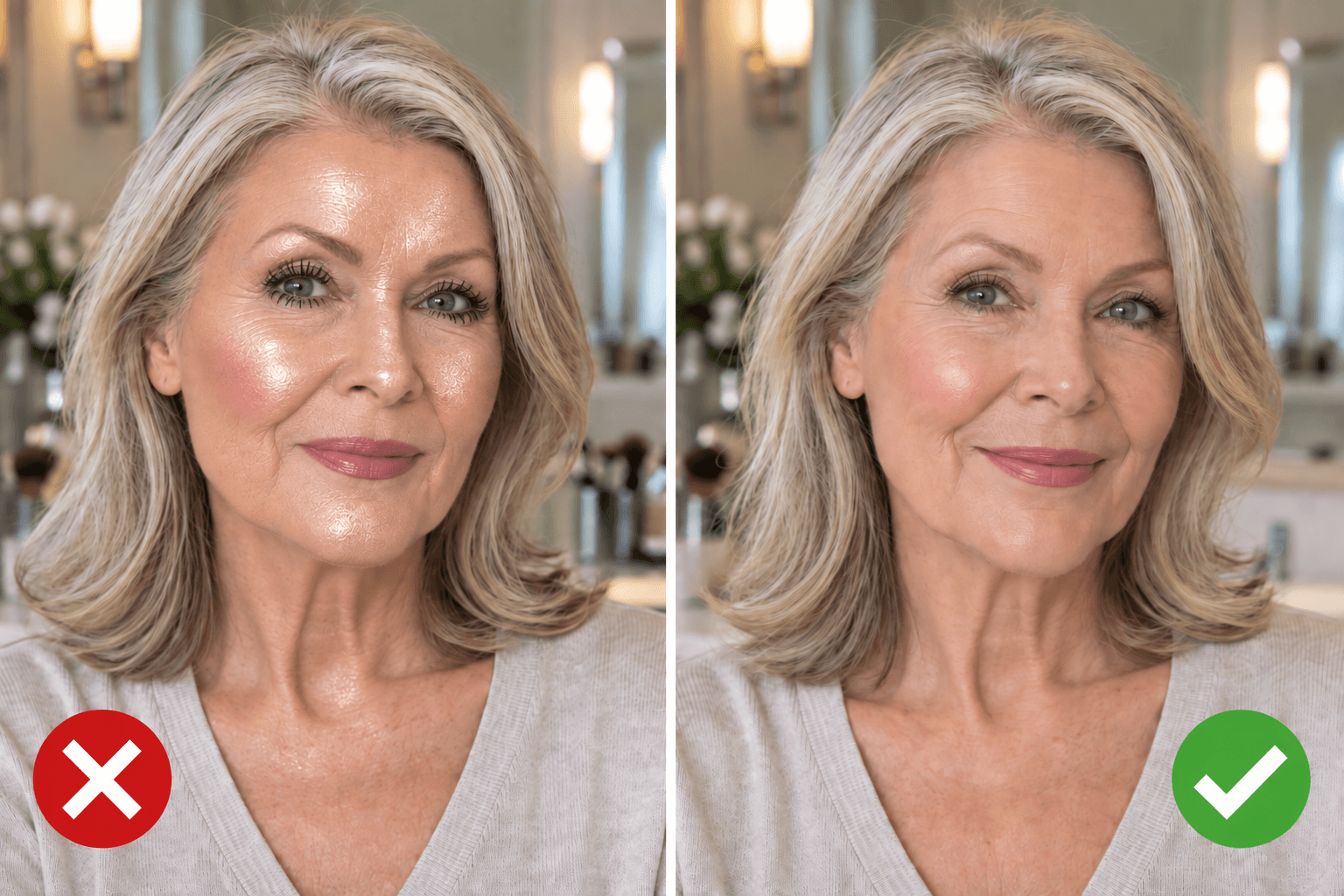
Before you know it, you’ve gone from a soft glow to lots of shine. Too much highlighter can also bring attention to fine lines, pores, and texture. Frosty or glittery formulas may make these areas stand out even more, especially in daylight.
A Better Way: Keep Your Glow Soft Let your highlighter whisper. Use a small amount on areas where light naturally hits your face; the high points of your cheeks are a good place to start.
Blend well and look before adding more. You can also skip areas where you have more texture; you don’t need every inch of your face to glow.
A soft highlight catches the light without calling attention to itself. The result is skin that looks fresh, healthy, and naturally radiant.
Small Changes Big Difference
Remember that makeup collection you were ready to completely replace?
You may not need to start over. As your skin changes, your makeup routine can change with it.

Sometimes that means using your favorite products in a new way. Other times, it might mean adding a product that better fits what your skin needs today. Use a lighter base where you need coverage and blend with a softer hand.
Give your upper lashes more attention, place blush a little higher, and keep your glow subtle. You don’t have to make all five changes tomorrow morning, either. Pick one and give it a try.
You may also find that a few Vibriance favorites make those changes even easier. Then take that same step back from the mirror. This time, notice just how fresh you look. Cheers to Positive Aging!
3. Heavy Mascara
One coat of mascara looks good, so another coat should look even better, right? Not always.
Too many coats can leave lashes looking clumpy and heavy, and loading up the lower lashes can also make the eye area look darker.
Add a little smudging under the eyes, and you may look more tired than awake. That’s probably not the look you were going for.
A Better Way: Focus on the Upper Lashes Start by giving your upper lashes most of the attention. Apply Vibriance Volumizing Mascara near the base of your upper lashes. Then pull the wand upward toward the tips.
This helps create definition while drawing the eye upward. Build your mascara slowly; stop and look before adding another coat.
You can also go lighter on the lower lashes. A small amount may be all you need, or you may prefer to skip them altogether. The goal is a clean, lifted definition that helps your eyes look open and awake.
4. Low Blush
We’ve always been told to smile and put blush on the apples of your cheeks. Sound familiar? It’s a makeup tip many of us learned years ago.
The problem is that placing blush too low can visually pull the face downward, and bringing the color too close to your nose or mouth can do the same.
Then there’s the temptation to load up your brush with color, but too much blush at once can be hard to blend and may leave you with two very noticeable cheeks.
A Better Way: Use Vibriance Radiance Stick to move your blush placement up a little. Apply a small amount slightly higher on your cheeks, then blend the color upward and outward. Start lightly and build from there.
It’s much easier to add more blush than to remove too much. You’re looking for a soft touch of color that brings warmth and life to your face. Ideally, no one thinks, “What great blush!” They think, “You look great today.”
5. Too Obvious Highlights
Highlighter is supposed to make your skin glow, so it can be tempting to put it everywhere - a little on your cheeks, a little on your nose, and maybe some on your forehead.
Before you know it, you’ve gone from a soft glow to lots of shine. Too much highlighter can also bring attention to fine lines, pores, and texture.
Frosty or glittery formulas may make these areas stand out even more, especially in daylight.
A Better Way: Keep Your Glow Soft Let your highlighter whisper. Use a small amount on areas where light naturally hits your face; the high points of your cheeks are a good place to start. Blend well and look before adding more.
You can also skip areas where you have more texture; you don’t need every inch of your face to glow. A soft highlight catches the light without calling attention to itself. The result is skin that looks fresh, healthy, and naturally radiant.
Small Changes Can Make a Big Difference
Remember that makeup collection you were ready to completely replace? You may not need to start over. As your skin changes, your makeup routine can change with it.
Sometimes that means using your favorite products in a new way. Other times, it might mean adding a product that better fits what your skin needs today.
Use a lighter base where you need coverage and blend with a softer hand.
Give your upper lashes more attention, place blush a little higher, and keep your glow subtle. You don’t have to make all five changes tomorrow morning, either.
Pick one and give it a try. You may also find that a few Vibriance favorites make those changes even easier. Then take that same step back from the mirror. This time, notice just how fresh you look. Cheers to Positive Aging!
4. Low Blush
We’ve always been told to smile and put blush on the apples of your cheeks. Sound familiar? It’s a makeup tip many of us learned years ago.
The problem is that placing blush too low can visually pull the face downward, and bringing the color too close to your nose or mouth can do the same.
Then there’s the temptation to load up your brush with color, but too much blush at once can be hard to blend and may leave you with two very noticeable cheeks.
A Better Way: Use Vibriance Radiance Stick to move your blush placement up a little. Apply a small amount slightly higher on your cheeks, then blend the color upward and outward. Start lightly and build from there.
It’s much easier to add more blush than to remove too much. You’re looking for a soft touch of color that brings warmth and life to your face. Ideally, no one thinks, “What great blush!” They think, “You look great today.”
5. Too Obvious Highlights
Highlighter is supposed to make your skin glow, so it can be tempting to put it everywhere - a little on your cheeks, a little on your nose, and maybe some on your forehead.
Before you know it, you’ve gone from a soft glow to lots of shine.
Too much highlighter can also bring attention to fine lines, pores, and texture.
Frosty or glittery formulas may make these areas stand out even more, especially in daylight.
A Better Way: Keep Your Glow Soft Let your highlighter whisper. Use a small amount on areas where light naturally hits your face; the high points of your cheeks are a good place to start. Blend well and look before adding more.
You can also skip areas where you have more texture; you don’t need every inch of your face to glow. A soft highlight catches the light without calling attention to itself. The result is skin that looks fresh, healthy, and naturally radiant.
Small Changes Can Make a Big Difference
Remember that makeup collection you were ready to completely replace? You may not need to start over. As your skin changes, your makeup routine can change with it.
Sometimes that means using your favorite products in a new way. Other times, it might mean adding a product that better fits what your skin needs today.
Use a lighter base where you need coverage and blend with a softer hand.
Give your upper lashes more attention, place blush a little higher, and keep your glow subtle. You don’t have to make all five changes tomorrow morning, either.
Pick one and give it a try. You may also find that a few Vibriance favorites make those changes even easier.
Then take that same step back from the mirror. This time, notice just how fresh you look. Cheers to Positive Aging!
CHECK OUT OUR MOST POPULAR CONTENT

5 Tips For Glowing Skin Over 50.

Beauty is Timeless... Not Flawless!

3 Ways To Embrace Aging.

5 Tips For Smooth Lips.

5 Tips For Living A 50+ And Fabulous Life!

3 Easy Steps for a Fresh Faced Look at Any Age.
10 Ways to DIY Your Spa Day at Home.