The Two-Layer Method for Unbalanced Skin
“Aging is not lost youth but a new stage of opportunity and strength.” Jane Fonda
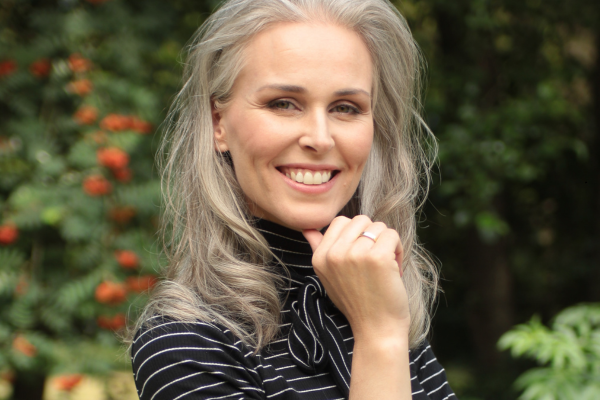
I recently got together with a close girlfriend. We’re both in our late 50s, but—at least in my mind—there’s a noticeable difference between us. Whenever we go out, she gets compliments on her appearance. Her skin looks calm, even, and healthy. If you look closely, yes, there are a few small wrinkles, but they’re barely noticeable.
I always assumed she was simply blessed with great genes. Meanwhile, I’ve tried so many different products and watched more skincare videos than I care to admit.
They were either unrelatable or the routines were so complicated that I lost interest halfway through. It all started to feel exhausting. I honestly thought my regular routine should be enough. I apply moisturizer every day and occasionally use serums. At first, my skin feels fine. But it never lasts. The area around my mouth starts to feel tight, and dry patches show up. At the same time, my cheeks and forehead feel heavy—almost like the product is just sitting on the surface instead of sinking in.
It didn’t always feel this way. The changes crept in slowly, but as I got older, they became harder to ignore. And yes, it was frustrating. Eventually, I asked my girlfriend what she was doing differently. She told me about something she called the two-layer method. When she explained it, I almost laughed—it sounded far too simple to make a real difference. Still, I figured, why not?
She went on to explain that the two-layer method wasn’t about adding more products or changing everything at once. It was about paying attention to how her skin felt in different areas and adjusting how she applied moisturizer.
Instead of treating her face like one flat surface, she treated it like skin that had lived a little—and needed different things in different places. That conversation stuck with me. I realized I’d been applying moisturizer the same way for years, even though my skin clearly wasn’t responding the same way anymore. No wonder it felt confusing—tight in some spots and heavy in others.
“Aging is not lost youth but a new stage of opportunity and strength.” Jane Fonda
I recently got together with a close girlfriend. We’re both in our late 50s, but—at least in my mind—there’s a noticeable difference between us. Whenever we go out, she gets compliments on her appearance. Her skin looks calm, even, and healthy. If you look closely, yes, there are a few small wrinkles, but they’re barely noticeable.
I always assumed she was simply blessed with great genes. Meanwhile, I’ve tried so many different products and watched more skincare videos than I care to admit.
They were either unrelatable or the routines were so complicated that I lost interest halfway through. It all started to feel exhausting. I honestly thought my regular routine should be enough. I apply moisturizer every day and occasionally use serums. At first, my skin feels fine. But it never lasts. The area around my mouth starts to feel tight, and dry patches show up. At the same time, my cheeks and forehead feel heavy—almost like the product is just sitting on the surface instead of sinking in.
It didn’t always feel this way. The changes crept in slowly, but as I got older, they became harder to ignore. And yes, it was frustrating. Eventually, I asked my girlfriend what she was doing differently. She told me about something she called the two-layer method. When she explained it, I almost laughed—it sounded far too simple to make a real difference. Still, I figured, why not?
She went on to explain that the two-layer method wasn’t about adding more products or changing everything at once. It was about paying attention to how her skin felt in different areas and adjusting how she applied moisturizer.
Instead of treating her face like one flat surface, she treated it like skin that had lived a little—and needed different things in different places. That conversation stuck with me. I realized I’d been applying moisturizer the same way for years, even though my skin clearly wasn’t responding the same way anymore. No wonder it felt confusing—tight in some spots and heavy in others.
“Aging is not lost youth but a new stage of opportunity and strength.” Jane Fonda
I recently got together with a close girlfriend. We’re both in our late 50s, but—at least in my mind—there’s a noticeable difference between us.
Whenever we go out, she gets compliments on her appearance. Her skin looks calm, even, and healthy. If you look closely, yes, there are a few small wrinkles, but they’re barely noticeable.
I always assumed she was simply blessed with great genes.
Meanwhile, I’ve tried so many different products and watched more skincare videos than I care to admit.
They were either unrelatable or the routines were so complicated that I lost interest halfway through. It all started to feel exhausting. I honestly thought my regular routine should be enough.
I apply moisturizer every day and occasionally use serums. At first, my skin feels fine. But it never lasts. The area around my mouth starts to feel tight, and dry patches show up.
At the same time, my cheeks and forehead feel heavy—almost like the product is just sitting on the surface instead of sinking in.
It didn’t always feel this way. The changes crept in slowly, but as I got older, they became harder to ignore. And yes, it was frustrating.
Eventually, I asked my girlfriend what she was doing differently. She told me about something she called the two-layer method.
When she explained it, I almost laughed—it sounded far too simple to make a real difference. Still, I figured, why not?
She went on to explain that the two-layer method wasn’t about adding more products or changing everything at once.
It was about paying attention to how her skin felt in different areas and adjusting how she applied moisturizer.
Instead of treating her face like one flat surface, she treated it like skin that had lived a little—and needed different things in different places.
That conversation stuck with me. I realized I’d been applying moisturizer the same way for years, even though my skin clearly wasn’t responding the same way anymore.
No wonder it felt confusing—tight in some spots and heavy in others.
Why One Layer Often Isn’t Enough
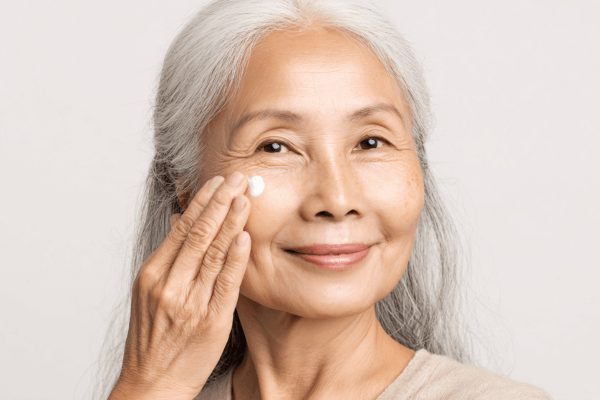
As we get older, our skin doesn’t respond evenly from one area to the next. The places that move more throughout the day—around the mouth, chin, and jawline—tend to lose moisture faster.
Other areas, like the cheeks or forehead, can hold onto product longer.
When you apply the same amount of moisturizer everywhere, it can create two opposing feelings at once. Some areas still feel tight, while others feel weighed down.
Why One Layer Often Isn’t Enough
As we get older, our skin doesn’t respond evenly from one area to the next.
The places that move more throughout the day—around the mouth, chin, and jawline—tend to lose moisture faster.
Other areas, like the cheeks or forehead, can hold onto product longer.
When you apply the same amount of moisturizer everywhere, it can create two opposing feelings at once. Some areas still feel tight, while others feel weighed down.
You’re left wondering whether you need more moisture or less. In reality, you need both, just in different places. This shift happens gradually.
Daily cleansing, changing weather, stress, and natural changes in skin all play a role.
What used to work effortlessly can start to feel inconsistent—not because your products stopped working, but because your skin no longer responds evenly.
One Layer Often Isn’t Enough
As we get older, our skin doesn’t respond evenly from one area to the next.
The places that move more throughout the day—around the mouth, chin, and jawline—tend to lose moisture faster.
Other areas, like the cheeks or forehead, can hold onto product longer.
When you apply the same amount of moisturizer everywhere, it can create two opposing feelings at once. Some areas still feel tight, while others feel weighed down.
You’re left wondering whether you need more moisture or less. In reality, you need both, just in different places. This shift happens gradually. Daily cleansing, changing weather, stress, and natural changes in skin all play a role.
What used to work effortlessly can start to feel inconsistent—not because your products stopped working, but because your skin no longer responds evenly.
You’re left wondering whether you need more moisture or less. In reality, you need both, just in different places. This shift happens gradually. Daily cleansing, changing weather, stress, and natural changes in skin all play a role.
What used to work effortlessly can start to feel inconsistent—not because your products stopped working, but because your skin no longer responds evenly.
Two-Layer Moisture Method
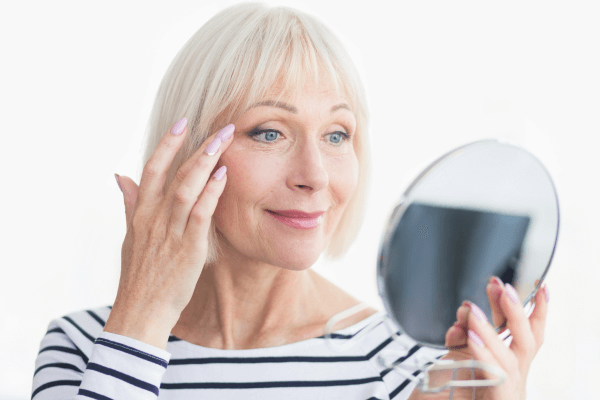
I started with what she suggested: nourishing my skin first, then being more thoughtful about where I placed moisture.
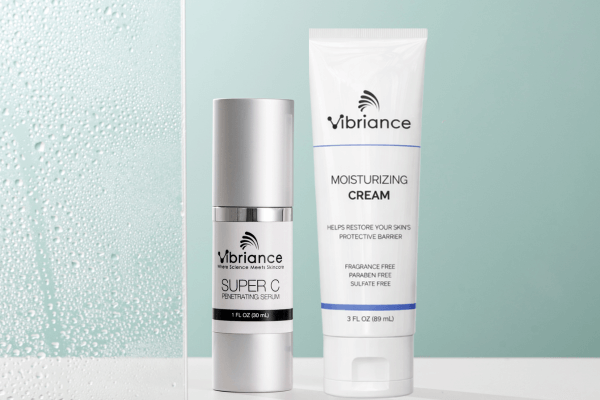
I apply Vibriance Super C Serum to clean skin. It feels light and helps my skin feel supported without heaviness.
Then I follow with Vibriance Moisturizing Cream, applying one light layer over my entire face. After that, I pause. I pay attention.
If certain areas still feel tight—usually around my mouth, chin, jawline, or outer cheeks—I add a second light layer of Vibriance Moisturizing Cream just to those spots.
That’s it! No extra steps. No complicated technique. What surprised me was how quickly my skin responded.
It didn’t feel coated. It didn’t feel greasy. It just felt more comfortable—like everything was finally in balance.
The Two-Layer Moisture Method
I started with what she suggested: nourishing my skin first, then being more thoughtful about where I placed moisture.
I apply Vibriance Super C Serum to clean skin. It feels light and helps my skin feel supported without heaviness.
Then I follow with Vibriance Moisturizing Cream, applying one light layer over my entire face. After that, I pause. I pay attention.
If certain areas still feel tight—usually around my mouth, chin, jawline, or outer cheeks—I add a second light layer of Vibriance Moisturizing Cream just to those spots.
That’s it! No extra steps. No complicated technique. What surprised me was how quickly my skin responded. It didn’t feel coated. It didn’t feel greasy. It just felt more comfortable—like everything was finally in balance.
Two-Layer Moisture Method
I started with what she suggested: nourishing my skin first, then being more thoughtful about where I placed moisture.
I apply Vibriance Super C Serum to clean skin. It feels light and helps my skin feel supported without heaviness.
Then I follow with Vibriance Moisturizing Cream, applying one light layer over my entire face. After that, I pause. I pay attention. If certain areas still feel tight—usually around my mouth, chin, jawline, or outer cheeks—I add a second light layer of Vibriance Moisturizing Cream just to those spots.
That’s it! No extra steps. No complicated technique. What surprised me was how quickly my skin responded. It didn’t feel coated. It didn’t feel greasy. It just felt more comfortable—like everything was finally in balance.
What This Method Can Change Over Time
Over time, the tight-dry-heavy feeling I’d been fighting started to settle down. The areas that used to feel dry stayed comfortable longer.
My cheeks and forehead stopped feeling weighed down. I also noticed my makeup behaved better.
Foundation didn’t cling to dry spots, and I wasn’t constantly adjusting or blotting throughout the day.
My routine felt easier and more forgiving. Most importantly, it felt doable. I wasn’t chasing the next product or wondering what I was doing wrong.
I was simply responding to what my skin was telling me. Perhaps the most meaningful change is how the routine feels. It becomes less about fixing and more about listening. Less about doing more and more about doing what actually helps.
What This Method Can Change Over Time
Over time, the tight-dry-heavy feeling I’d been fighting started to settle down. The areas that used to feel dry stayed comfortable longer.
My cheeks and forehead stopped feeling weighed down. I also noticed my makeup behaved better.
What This Method Can Change Over Time
Over time, the tight-dry-heavy feeling I’d been fighting started to settle down. The areas that used to feel dry stayed comfortable longer.
My cheeks and forehead stopped feeling weighed down.I also noticed my makeup behaved better.
Foundation didn’t cling to dry spots, and I wasn’t constantly adjusting or blotting throughout the day.
My routine felt easier and more forgiving. Most importantly, it felt doable. I wasn’t chasing the next product or wondering what I was doing wrong.
I was simply responding to what my skin was telling me. Perhaps the most meaningful change is how the routine feels.
It becomes less about fixing and more about listening. Less about doing more and more about doing what actually helps.
Skin in Balance
What this experience reminded me is that skincare doesn’t have to be complicated to be effective.
Sometimes it just needs to catch up to where we are in life.
The routines that served us for years don’t always translate perfectly as our skin changes, and that doesn’t mean we’ve done anything wrong.
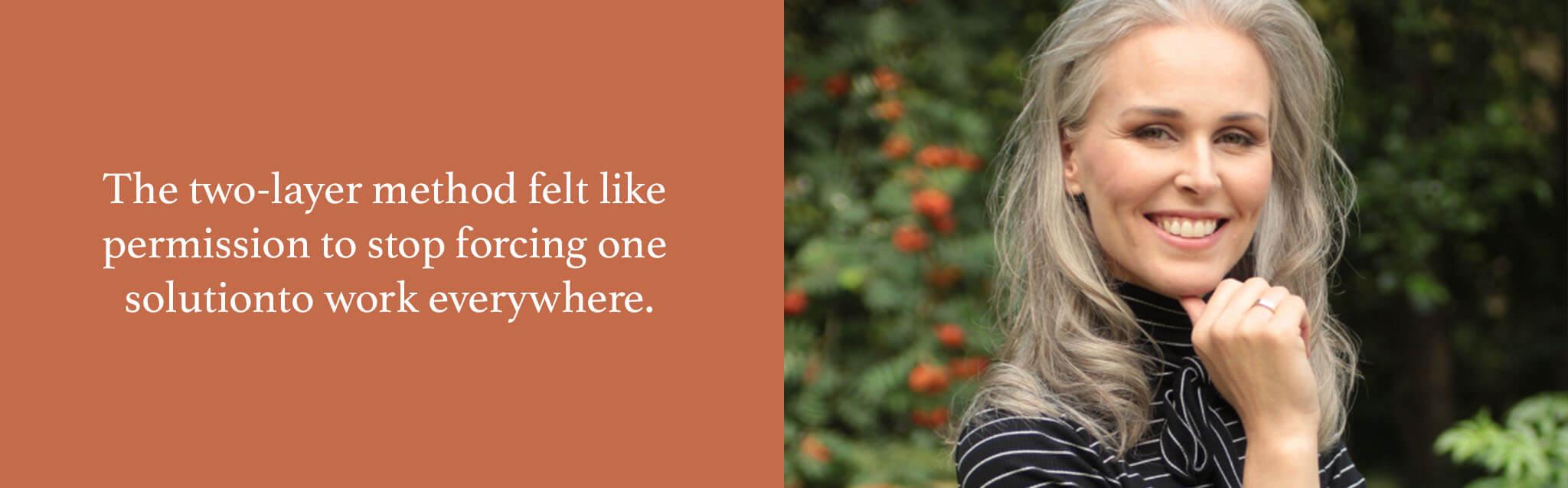
The two-layer method felt like permission to stop forcing one solution to work everywhere. It allowed me to support the areas that need a little more care, and letting the rest be.
There’s something reassuring about a routine that feels flexible and forgiving. One that doesn’t demand perfection, extra time, or endless products.
Just attention, intention, and a bit of kindness toward skin that has carried us through a lot.
If your skin has been feeling inconsistent or unpredictable, it may not be asking for more effort—just a more thoughtful approach. Cheers to Positive Aging!

Foundation didn’t cling to dry spots, and I wasn’t constantly adjusting or blotting throughout the day.
My routine felt easier and more forgiving. Most importantly, it felt doable. I wasn’t chasing the next product or wondering what I was doing wrong. I was simply responding to what my skin was telling me.
Perhaps the most meaningful change is how the routine feels. It becomes less about fixing and more about listening. Less about doing more and more about doing what actually helps.
Skin in Balance
What this experience reminded me is that skincare doesn’t have to be complicated to be effective.
Sometimes it just needs to catch up to where we are in life.
The routines that served us for years don’t always translate perfectly as our skin changes, and that doesn’t mean we’ve done anything wrong.
The two-layer method felt like permission to stop forcing one solution to work everywhere. It allowed me to support the areas that need a little more care, and letting the rest be.
There’s something reassuring about a routine that feels flexible and forgiving. One that doesn’t demand perfection, extra time, or endless products.
Just attention, intention, and a bit of kindness toward skin that has carried us through a lot. If your skin has been feeling inconsistent or unpredictable, it may not be asking for more effort—just a more thoughtful approach. Cheers to Positive Aging!
Skin in Balance
What this experience reminded me is that skincare doesn’t have to be complicated to be effective. Sometimes it just needs to catch up to where we are in life.
The routines that served us for years don’t always translate perfectly as our skin changes, and that doesn’t mean we’ve done anything wrong.
The two-layer method felt like permission to stop forcing one solution to work everywhere. It allowed me to support the areas that need a little more care, and letting the rest be.
There’s something reassuring about a routine that feels flexible and forgiving. One that doesn’t demand perfection, extra time, or endless products.
Just attention, intention, and a bit of kindness toward skin that has carried us through a lot. If your skin has been feeling inconsistent or unpredictable, it may not be asking for more effort—just a more thoughtful approach. Cheers to Positive Aging!
CHECK OUT OUR MOST POPULAR CONTENT

5 Tips For Glowing Skin Over 50.

Beauty is Timeless... Not Flawless!

3 Ways To Embrace Aging.

5 Tips For Smooth Lips.

5 Tips For Living A 50+ And Fabulous Life!
3 Easy Steps for a Fresh Faced Look at Any Age.
10 Ways to DIY Your Spa Day at Home.